


Description
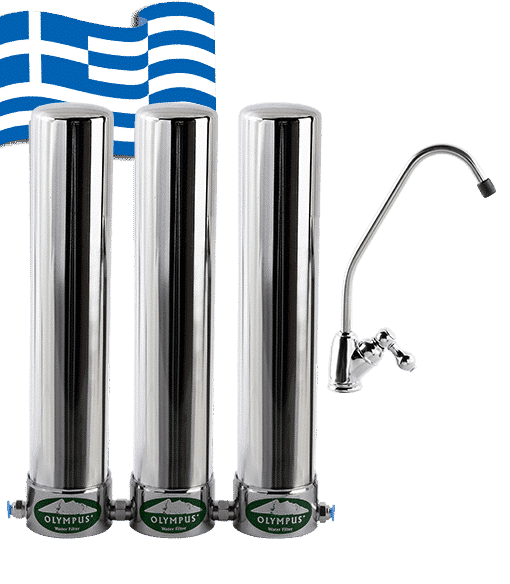
3 STAGES OF PURIFICATION WITH REPLACEABLE CERAMIC FILTER
* The replacement filter lasts 6 months or 2000 liters of water (whichever comes first)
* The Olympus mini water filter is designed for cases where a small consumption of filtered water is required, such as students, people living alone, etc.
It is unique because:
1. This is the water filter that is manufactured in Greece by CENTER PLUS SA and combines international experience with the most advanced EUROPEAN technology in micropore ceramic water filters.
2. The ceramic filter that the device contains and whose pores are 10 times smaller than the size of pathogenic bacteria, which in some cases may be present in drinking water*, in addition to sediment, silt and rust, it retains pathogenic microorganisms in the water such as: E. Coli, typhoid, cholera, salmonella, fecal coliforms, staphylococci, pathogenic and spore-forming bacteria, enterococci, cryptosporidium, etc.
3. The compact activated carbon contained in the inner part of the ceramic filter retains 100% of chlorine and to a satisfactory extent (if present in the water) pesticides, phenols, asbestos fibers, lead and other heavy metals, while allowing us to drink all the beneficial elements of the water such as: mineral salts, trace elements, etc.
4. Installs in 1 minute on almost all kitchen faucets or other faucets (cannot be installed on shower faucets).
5. The connecting valve (switch) it has allows it to supply filtered water when we want it and unfiltered when we want to wash.
6. Olympus+ water filters are to be used with municipally controlled city water and are the water filters that will keep you drinking HEALTHY, CRYSTAL CLEAR, OLYMPIC WATER for the rest of your life.
7. Finally, the Olympus mini water filter is designed for cases where there is a small consumption of filtered water, such as students, people living alone, etc.
* City water, because it is controlled by municipal authorities and chlorinated, is generally safe from microbial contamination. However, in some cases, water can be contaminated by the ingress of bacteria, either due to burst pipes in the network, or due to insufficient chlorination of the water, or due to the presence of certain bacteria such as cryptosporidium, etc., which are resistant to disinfection and chlorine cannot destroy them.